My testosterone was at 353 ng/dL at 28 years old.
My zinc was genuinely deficient. My thyroid was underconverting. My inflammation ratio was nearly 3x the upper limit.
I felt fine. I trained every day.
But the bloodwork told a different story.
So I ran full panels through Lucis and had Pauline Jumeau build me a protocol targeting exactly what was broken.
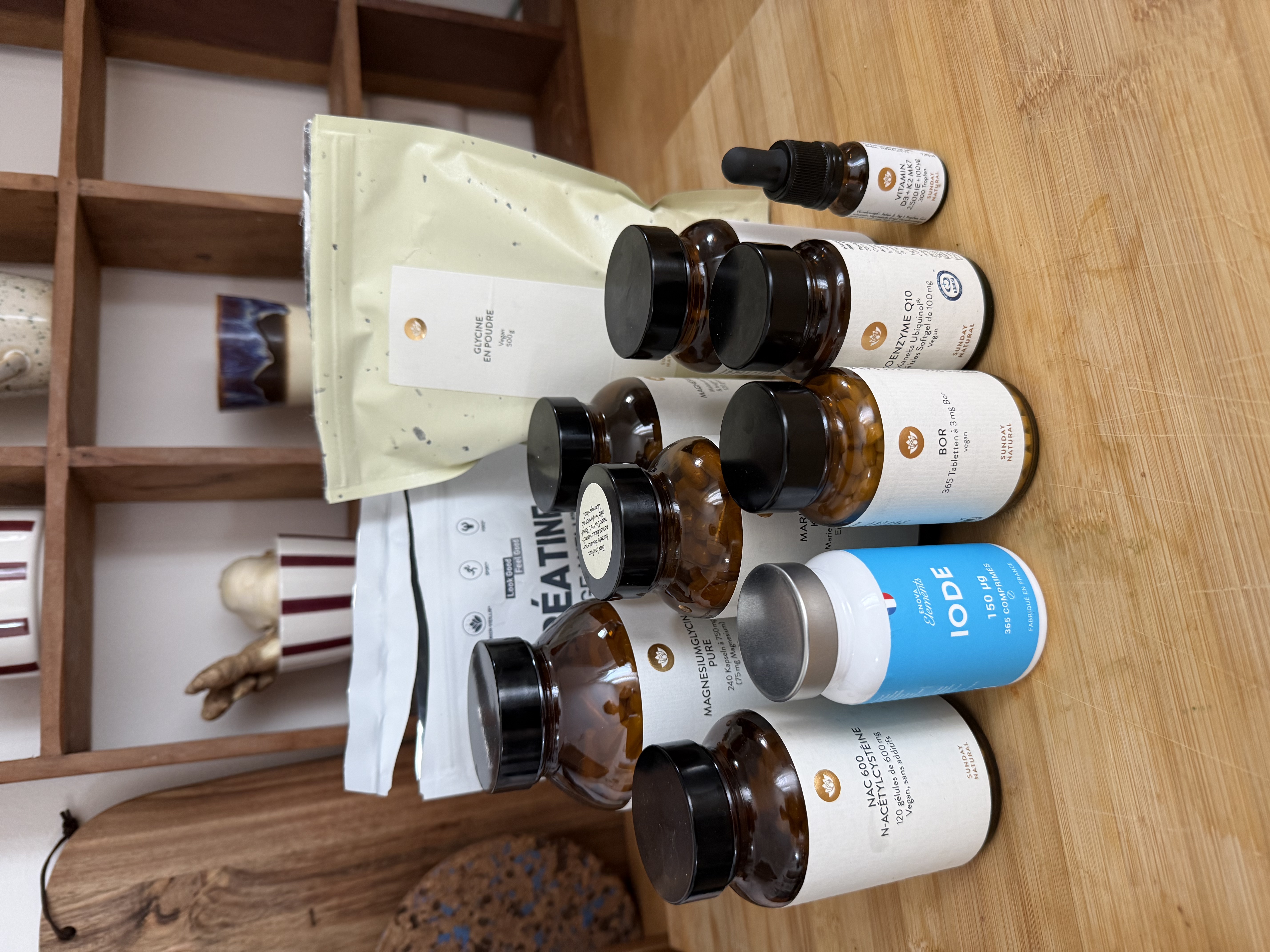
11 supplements. Every one tied to a number in my blood.
What my blood showed
Full breakdown on my biomarkers page. Here's the short version.
| Marker | My value | Reference | Status |
|---|---|---|---|
| Testosterone | 353 ng/dL | 400–1000 | low |
| LH (signals testosterone production) | 2 mIU/mL | 1.7–8.6 | suppressed |
| SHBG (binds testosterone, makes it unavailable) | elevated | — | too high |
| Free T3 (active thyroid hormone) | 2.67 pg/mL | 2.0–4.4 | low-normal |
| Zinc | 14 µmol/L | 16.8–22 | deficient |
| Vitamin D | 34.1 ng/mL | 30–100 | low |
| PTH (parathyroid, signals bone calcium loss) | 79.9 pg/mL | 15–65 | elevated |
| AA/EPA ratio (inflammation) | 22.94 | 8.75–17.61 | 3x ceiling |
| Omega-3 index | 6.07 | 6.82–9.77 | below range |
| Selenium | 67 µg/L | 60–120 | low |
| Iodine | 67 µg/L | 100+ | low |
| Magnesium (serum) | 2.3 mg/dL | 1.6–2.5 | normal (unreliable) |
Three systems were broken:
Hormones. My body wasn't producing enough testosterone, and what it did produce was getting locked up by SHBG.
Zinc, vitamin D, boron, and milk thistle all target different parts of this chain.
Thyroid. T3 was low-normal.
Your body makes T4 first, then converts it to T3. That conversion needs selenium and iodine. Both were low.
Inflammation. My AA/EPA ratio was nearly 3x the ceiling. Omega-3 is the most direct lever to shift that.
Where I buy
Almost everything from Sunday Natural. European lab testing on every batch. Full transparency. No fillers.
Heads up: the French marketplace doesn't carry everything.
Some products are only available on the German or Dutch store.
Same company, same quality. Just switch the site if you can't find something.
My 11 supplements
Creatine
During YC I was sleeping 5 hours a night. Ran 15g daily for 2 months after seeing Dr. Rhonda Patrick's research on creatine and sleep-deprived brains.
Sharper mornings, sustained focus through 6+ hour sessions.
I wrote about it and the internet lost its mind.
Vitamin D3 + K2
Vitamin D at 34.1. PTH at 79.9 means my bones were compensating.
D3 also feeds directly into testosterone production.
K2 routes calcium to bone, not arteries.
Omega-3
AA/EPA ratio at 22.94. Ceiling is 17.6.
Probably the highest-impact supplement in the entire stack.
Iodine
Iodine at 67 µg/L. Should be above 100.
Your thyroid needs it to make T4.
I dropped iodized salt. The additives aren't worth it.
Glycine
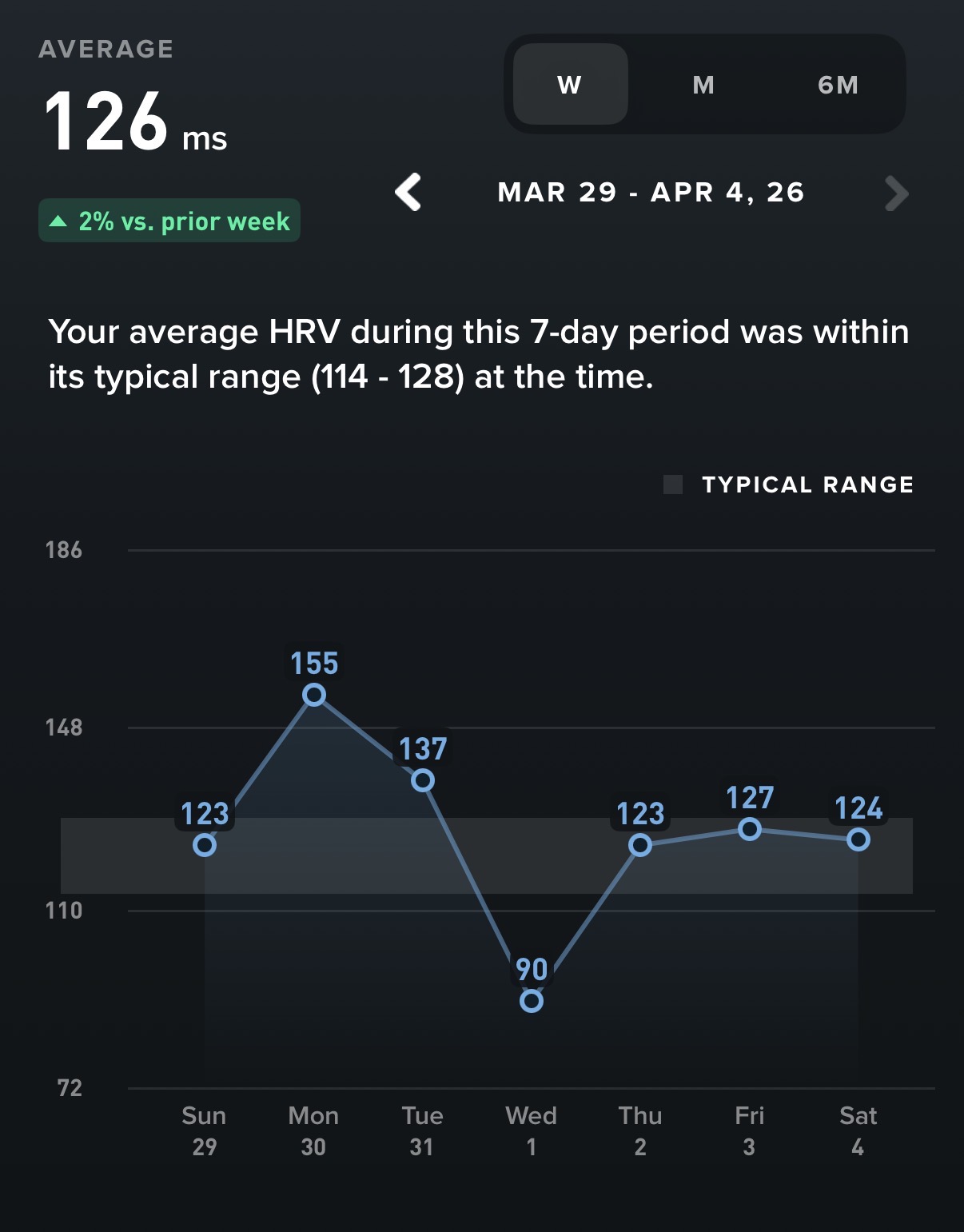
Since bumping to 6g, my HRV jumped.
Averaging 126 ms over the last week on Whoop.
I mix it in water before bed. Cheap. Almost no downside.
Magnesium Bisglycinate
Serum says "normal" but serum only shows 1% of your total magnesium.
I train daily and sweat a lot — you lose magnesium through sweat.
Bisglycinate absorbs well and doesn't wreck your stomach.
NAC
SHBG was elevated. Pauline added this for liver support.
Your body turns NAC into glutathione — your liver's main detox tool.
Empty stomach because food blocks absorption.
CoQ10
My CoQ10 was 633 µg/L. The target range on my Lucis panel was higher for athletes at my training volume.
CoQ10 powers your cells' energy production — especially heart, brain, and muscles.
B12
MHA is the bioactive form — your body can use it directly.
The cheap version (cyanocobalamin) needs to be converted first, and not everyone does that well.
Pauline cycles it to avoid over-supplementing.
Milk Thistle
Targets elevated SHBG. That's the protein that grabs your testosterone before your body can use it.
Helps the liver bring it down.
Boron
Free testosterone was low, SHBG elevated.
Boron helps free up testosterone that SHBG is locking down.
Not a magic bullet, but the research is solid enough for a short course.
Food, not pills
Sunflower lecithin in my nutty pudding.
Every morning I make Bryan Johnson's nutty pudding — macadamia nuts, walnuts, flaxseed, berries, strawberries, and pomegranate juice.
I add one tablespoon of sunflower lecithin to it. Phosphatidylcholine source — supports the same liver/SHBG pathway that NAC and milk thistle are targeting, from a different angle.
Also covers choline, which most people are deficient in but isn't on any standard panel.
3 Brazil nuts per day.
Selenium at 67 µg/L. Should be above 100.
Three nuts gets you ~200 µg. Absorbs better than a capsule.
I get mine through my daily nutty pudding.
One tablespoon of high-polyphenol extra virgin olive oil.
Anti-inflammatory. Stacks with omega-3 to keep bringing that AA/EPA ratio down.
One scoop with a meal. Simple.
My daily schedule
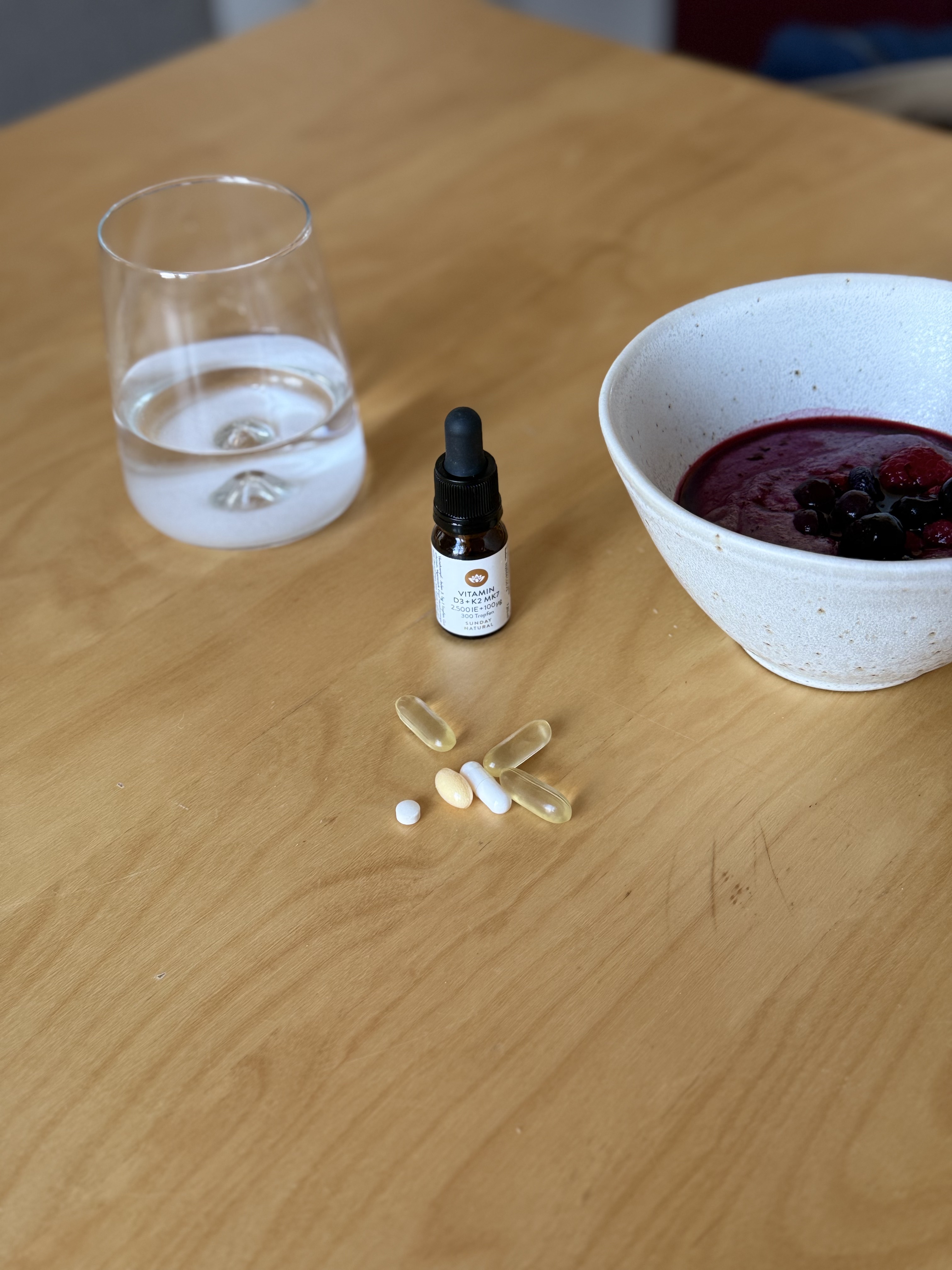
| Morning, fasted | Iodine |
| Breakfast | CoQ10, B12, Boron, Creatine, Vitamin D3+K2, Omega-3 |
| Nutty pudding | Sunflower Lecithin, Brazil Nuts |
| Between meals | NAC |
| Before dinner | Milk Thistle |
| Bedtime | Glycine, Magnesium Bisglycinate |
Going further: peptides
I recently started experimenting with peptides — specifically retatrutide, a GLP-1/GIP/glucagon triple agonist, at microdoses.
I'm tracking everything:
- RHR (Whoop)
- Appetite signaling
- Sleep quality (Whoop)
- Cognitive baseline
- Body composition (DEXA)
- Metabolic markers (next bloodwork)
Too early for conclusions. I'll document what I find here as the data comes in.
What's next
I haven't retested yet. The protocol started after my January 2026 panels. Next retest is planned for Q2 2026.
But some things are already moving.
Since adding 6g of glycine before bed, my HRV went up. Averaging 126 ms over the last week.
When results come in, I'll update this page with before/after numbers. Markers I'm tracking:
- Vitamin D
- Zinc
- Testosterone (total + free)
- Omega-3 index
- CoQ10
- B12
- T3
- Cortisol
- Estradiol
Iodine doesn't accumulate. No point retesting. Just take it.
Who should NOT follow this protocol
This was built for me. Specifically for my blood panel, my training volume, my deficiencies.
If you're pregnant, on blood thinners, have kidney issues, or take medication that interacts with any of these supplements: talk to your doctor first.
High-dose zinc can throw off copper.
NAC interacts with some medications.
Iron supplementation without confirmed deficiency can be dangerous.
Don't self-prescribe. Get tested.
How to build your own
Your deficiencies are not my deficiencies.
Step 1: Get full bloodwork.
I used Lucis (code MAXG10 for 10% off). They test markers most standard panels miss.
Step 2: Work with someone who reads the data.
Not a GP who glances at your results and says "everything looks normal."
I work with Pauline Jumeau.
Step 3: Supplement only what's broken.
Not what a podcast told you to take.
Step 4: Retest in 3 months.
If a marker didn't move, change the dose or the form.
If it corrected, stop.