
On September 9, a French scientist received the prize that often comes before a Nobel.
His discovery just produced a drug. And it raises a bigger question: can we reduce how much sleep we need?
A French scientist honored for finding the cause of narcolepsy

Emmanuel Mignot, a researcher at Stanford, shares the 2026 Lasker Award with Masashi Yanagisawa from Japan.[1]
Narcolepsy is the disease where you fall asleep suddenly, in the middle of the day.
In 1999, Mignot traced it in narcoleptic dogs. Yanagisawa had just discovered a brain molecule: orexin. The 2 leads met. In humans, type 1 narcolepsy comes from a lack of orexin.[1]
27 years later, that discovery produced the 1st drug that treats the cause. Takeda's oveporexton mimics orexin. It was approved in the US in August 2026.[2]
What is orexin?
It is the neuropeptide that keeps you awake.
When it is missing, the brain slips into sleep without warning.[1]
But the opposite exists. Some people carry a mutation in the DEC2 gene that puts less of a brake on orexin production. They sleep 4 to 6 hours a night, and it is enough.[3]
When that mutation is reproduced in mice, they make more orexin and sleep less.[3]
Trump says he sleeps 4 hours; his physician said 4 to 5.[4] Macron is known for sleeping very little.[5] They may be "short sleepers". Nothing proves it, but the question is fair.
Lilly bets $6.3 billion on orexin
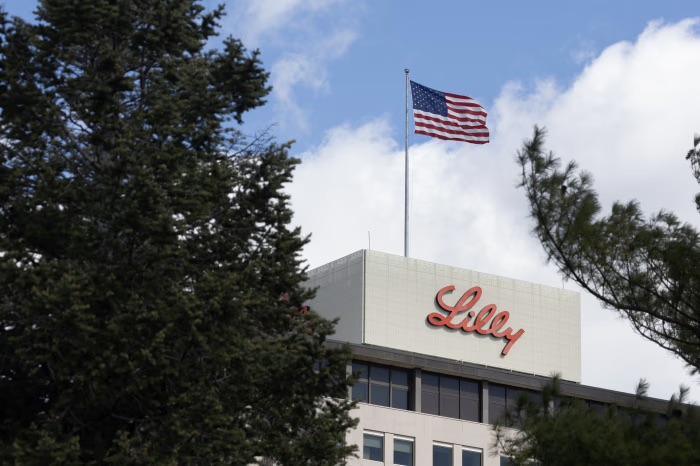
Lilly is the US drugmaker behind Mounjaro, one of the best-selling GLP-1s.
In 2026 it bought Centessa, a biotech developing molecules that activate the orexin receptor: $6.3 billion upfront, up to $7.8 billion in total.[6]
On paper, it is about treating narcolepsy and other disorders of excessive sleepiness.[6]
But $6 billion for a rare disease? The real market is elsewhere.
A GLP-1 for sleep?
GLP-1s started with diabetes, then obesity. Today 1 in 8 US adults takes one, about 30 million people, sometimes with no disease at all.[7]
Now imagine the same path for a molecule that takes your nights from 8 hours to 4.
From age 20 to 80, you would gain 10 years of waking life.
The key part is still unproven. These molecules keep people awake, but no one has shown that 4 hours restore as much as 8.
The bet is on.
Sources
- Lasker Foundation, Orexin, a brain peptide that maintains wakefulness, Albert Lasker Basic Medical Research Award, 2026.
- Takeda, FDA Approves ORZEYFUL for Adults With Narcolepsy Type 1, press release, August 5, 2026.
- Hirano, A. et al., DEC2 modulates orexin expression and regulates sleep, PNAS, 2018.
- Global News, Donald Trump sleeps 4-5 hours each night, January 2018.
- Le JDD, Emmanuel Macron, un président qui dort peu (in French).
- Eli Lilly, Lilly to acquire Centessa Pharmaceuticals to advance treatments for sleep-wake disorders, press release, March 31, 2026.
- KFF, Poll: 1 in 8 adults say they are currently taking a GLP-1 drug, November 2025.
General information, not medical advice. No molecule has been shown to reduce sleep need in healthy people.