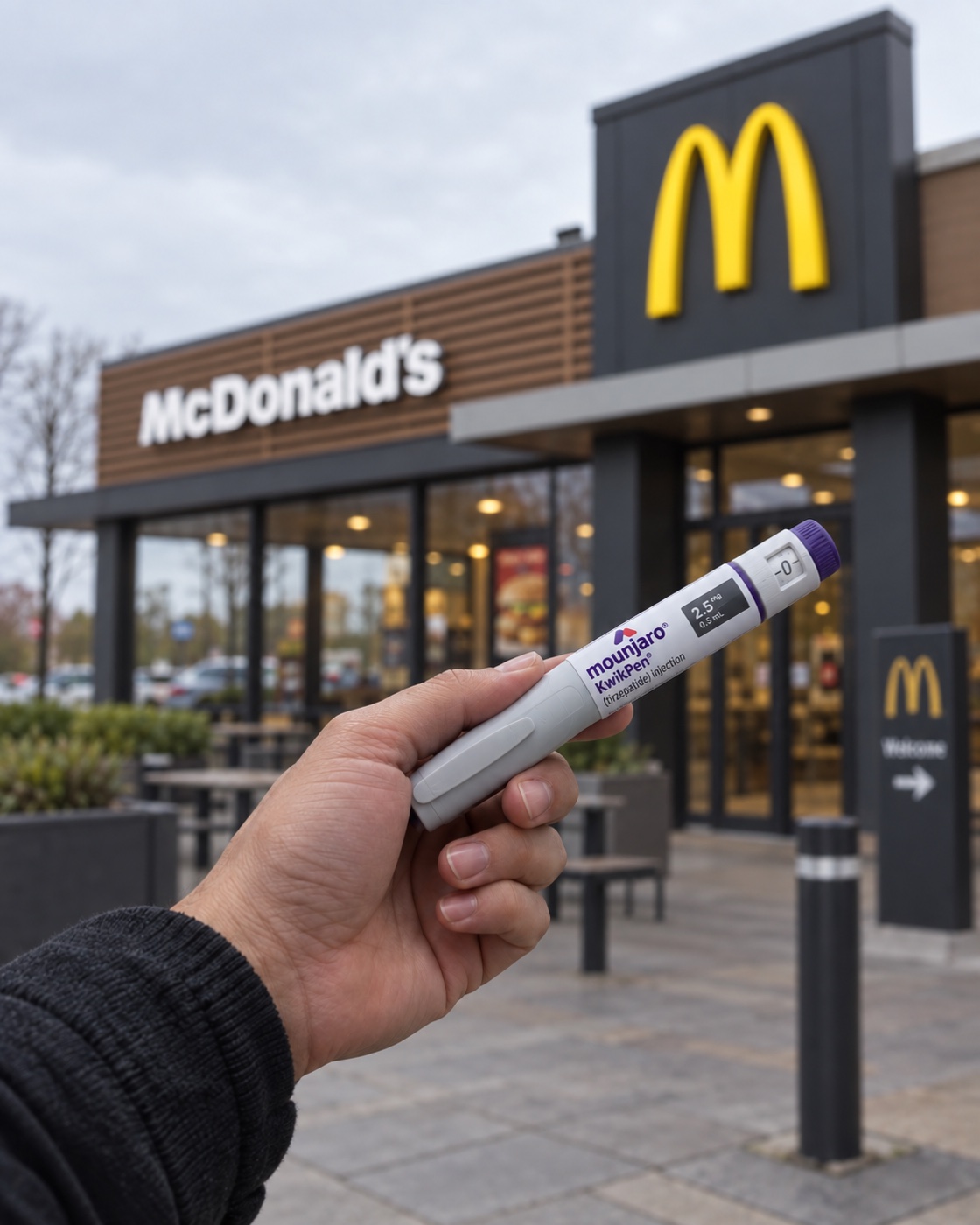
GLP-1s are changing the economy. It starts on supermarket shelves.
In the US, 1 adult in 8 takes a GLP-1, roughly 30 million people.[1] When that many people get less hungry at the same time, it shows up in food companies' numbers.
What leaves the basket
Cornell researchers tracked grocery purchases in 150,000 US households. In the first 6 months on treatment, a household spends 5.3% less on food.[2]
And the drop is very uneven across categories:
- Chips and salty snacks: -11.5%
- Pastries and baked goods: -8.5%
- Fast food and coffee shops: -8%
- Soda: -6.8%
These are exactly the categories the food industry spent 40 years engineering so we would eat more of them than we meant to.
What grows instead
People buy less, but not less of everything. Yogurt, fresh fruit, protein bars and meat snacks are all growing.[2]
There is a medical reason behind it. Losing weight on a GLP-1 does not only mean losing fat. In the STEP 1 semaglutide trial, lean mass accounted for roughly 40% of the weight lost.[3] Lean mass means muscle, water, organs.
Hence the advice doctors keep repeating: eat less, but aim for more protein at every meal. When appetite shrinks, every portion has to deliver more.
McDonald's puts the grams on the board
In February 2026, McDonald's CEO Chris Kempczinski told an earnings call the chain is testing items for customers on GLP-1s, who order smaller portions, snack less and drink less soda.[4]
The answer landed on April 21: a protein badge appeared on 17 menu items, on ordering kiosks and in the app, in the US.[5]
- McCrispy Strips: 30g
- 10 Chicken McNuggets: 23g
- McDouble: 22g
- Snack Wrap and Egg McMuffin: 17g
In total, more than 30 menu items carry 15g of protein or more.[5]
The detail that matters: the recipes did not change. The sales argument did.
Nestlé, Starbucks, Danone
McDonald's is far from alone.
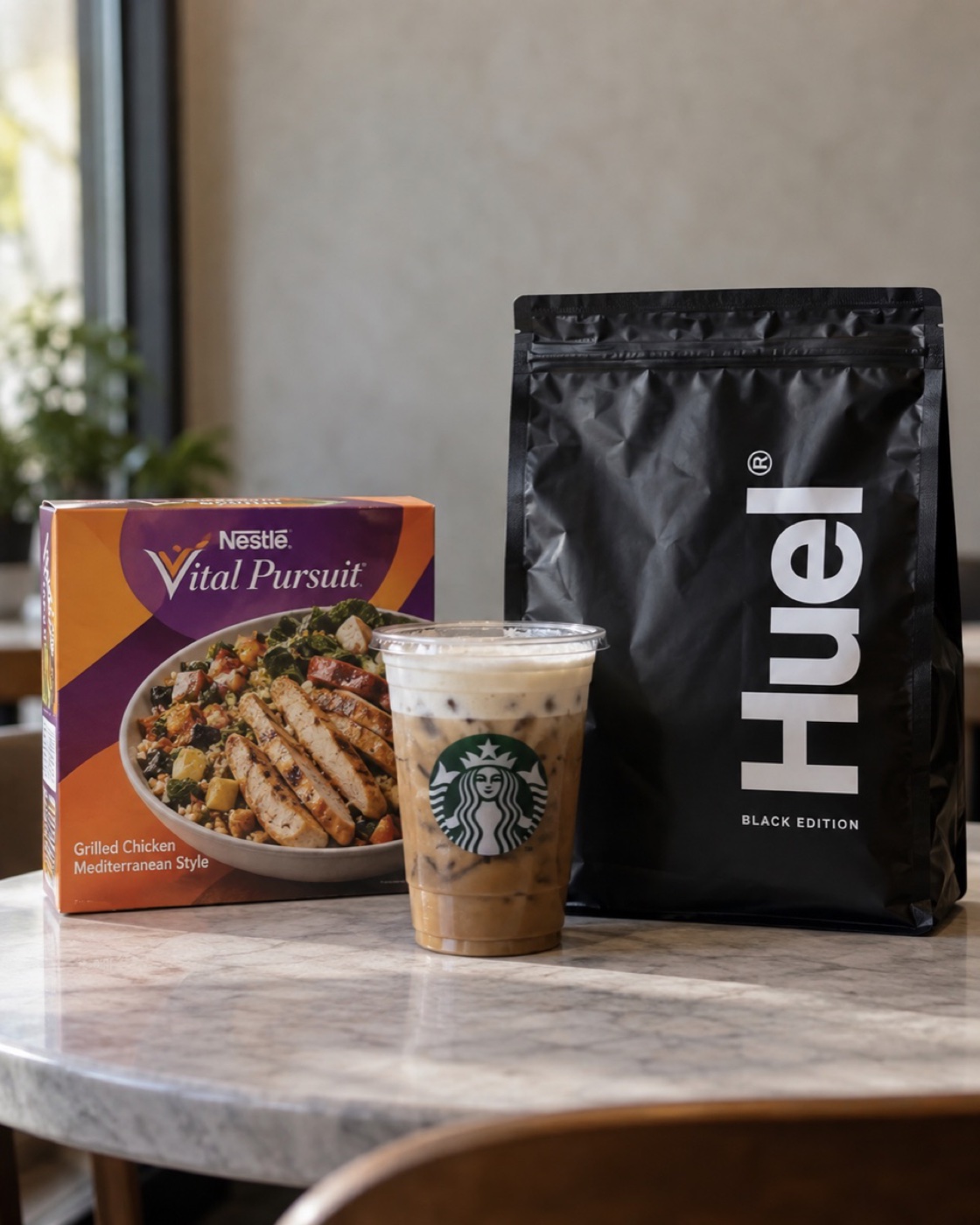
Nestlé built a whole brand for these customers. Vital Pursuit is 14 frozen meals with at least 20g of protein, under $5, positioned as a companion to GLP-1 treatment.[6]
Starbucks launched a protein cold foam that adds about 15g of protein to any cold drink. Nine months later, an executive said it sells almost as much as the flat white.[7]
Danone closed its acquisition of Huel on September 4, 2026, the British brand of complete meals in powder and ready-to-drink form.[8] The group files the deal under “functional nutrition”.
What this says about the market
For decades, a food product sold on three arguments: taste, price, quantity.
A fourth one has arrived: what the portion delivers. Protein, fiber, vitamins. The industry calls it nutrient density, and it has become a central sales argument.
One limit is worth stating. A frozen meal is still a frozen meal, and a nugget labelled 23g of protein is still a nugget. Nutrient density is real progress on paper, it does not turn processed food into whole food.
But the signal is there: for the 1st time in a long while, big brands have an incentive to put more nutrients into smaller portions.
Sources
- KFF poll on GLP-1 use in the US.
- Cornell Chronicle, Ozempic is changing the foods Americans buy (Hristakeva et al., Journal of Marketing Research).
- Neeland et al., Changes in lean body mass with GLP-1-based therapies, Diabetes, Obesity and Metabolism (2024).
- Benzinga, McDonald's tests a high-protein menu as GLP-1 use surges (February 2026).
- McDonald's, Makes It Easier to Find Protein-Forward Menu Favorites.
- Nestlé USA, Vital Pursuit nationwide launch.
- CNBC, Protein coffee? Brands cash in on functional beverage boom (June 2026).
- Danone, September 4, 2026 press release on completing the Huel acquisition.
General information, not medical advice.