GLP-1s are affecting far more industries than anyone expected.
Quick reminder: GLP-1s are drugs like Ozempic, Wegovy and Mounjaro. They curb appetite and drive weight loss.
The first GLP-1 was approved for diabetes in the US in 2005. Ozempic arrived in 2017, followed by its obesity version, Wegovy, in 2021.[1] Today some people even take them in small doses, microdosing, for longevity or optimization, even though the evidence is still limited.
In the US, 1 in 8 adults is on a GLP-1, about 30 million people.[2]
In France, about 700,000 people take one, and more than 1 million soon, according to the ANSM.[3] And the rules are changing: since June 15, 2026, Wegovy and Mounjaro are 65% reimbursed for severe obesity.[4]
Studies published in recent months point the same way: industries nobody suspected are going to change deeply over the next few years.
Here are the 5 most affected.
1. Airlines
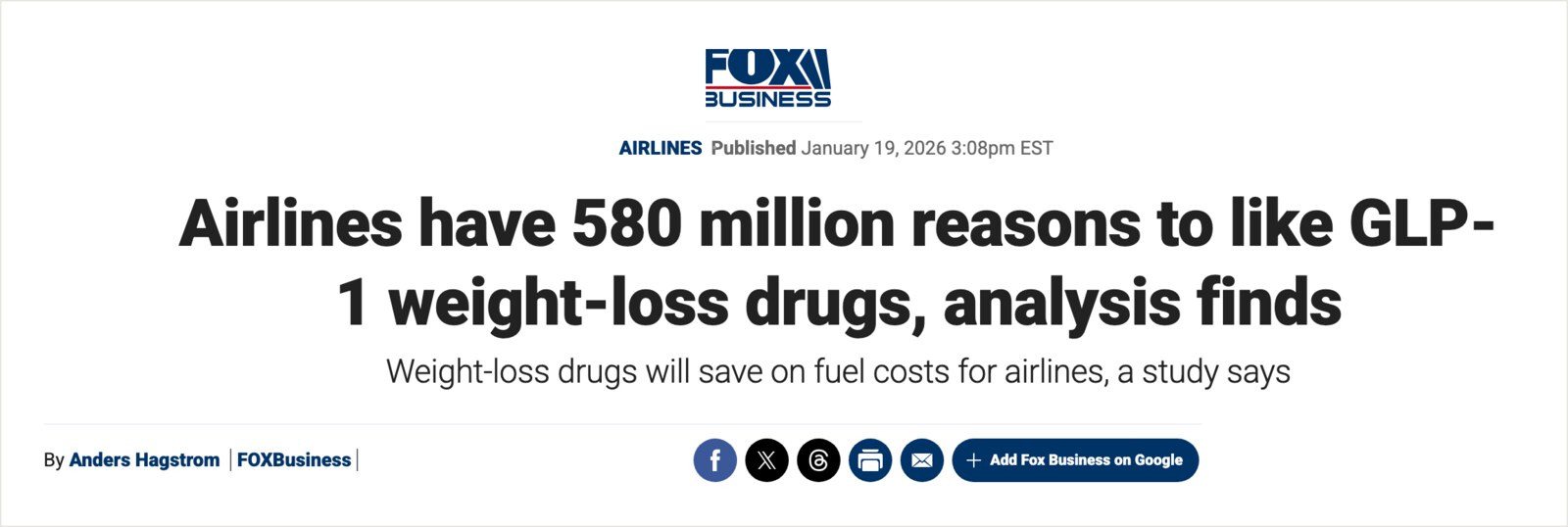
If the average passenger weighed 10% less, the 4 largest US airlines (American, Delta, Southwest and United) would save up to $580 million in fuel a year, according to the bank Jefferies.[5]
A lighter plane burns less. That is about 1.5% of their jet fuel bill.[5]
2. Food
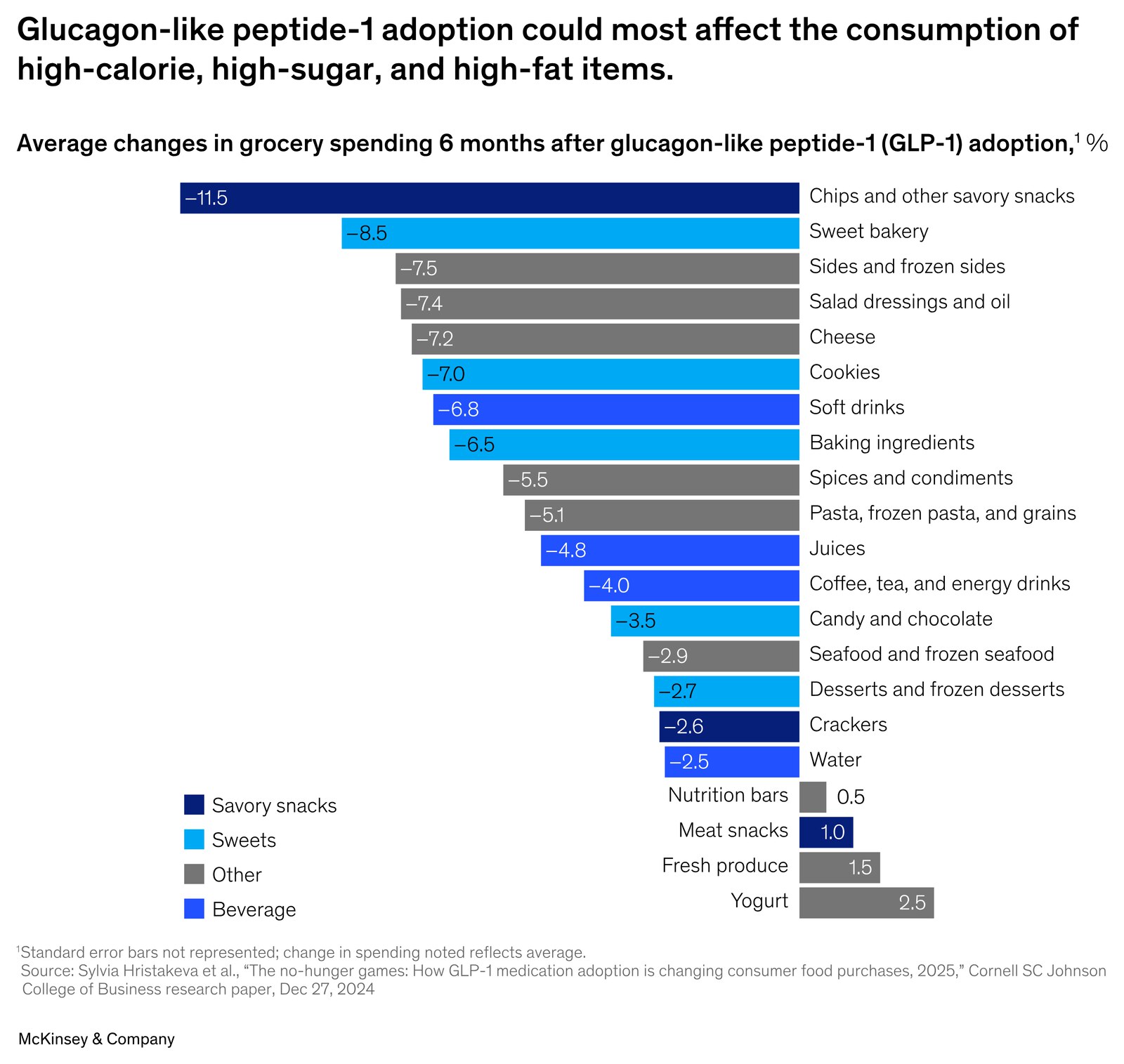
This is where the shock is biggest. Within 6 months of starting treatment, a household spends 5.3% less on food.[6]
- Chips and savory snacks: -11.5%
- Sweet bakery: -8.5%
- Soft drinks: -6.8%
- Fast food and coffee shops: -8%
Fun fact: McDonald's could lose up to 28 million visits a year because of GLP-1s, about $674 million, according to Redburn Atlantic. Its CEO says the company is watching closely.[7]
3. Alcohol
In a Morgan Stanley survey of 300 patients, 62% say they drink less often since starting treatment.[8]
4. Clothing
When you lose weight, you rebuild your wardrobe. After 6 to 8 months on treatment, clothing spending rises 9.9%, and 73% of users have changed size.[9]
5. Healthcare
- Obesity surgery is declining: -34% between 2022 and 2025 in the US, while GLP-1 prescriptions jumped 140%.[10]
- Sleep apnea devices: in 2024, Zepbound became the first drug approved for sleep apnea in the US. Over time, some patients may no longer need their breathing machine.[11]
A new era
We talk a lot about AI changing the way we work. Another revolution is moving in parallel, more quietly: biology.
For the first time, a molecule is changing, at scale, what millions of people want to eat and drink. We are no longer just treating the body. We are learning to tune its signals.
AI is changing how we think. GLP-1s are changing how we live. And this is only the beginning.
Sources
- GLP-1 receptor agonists beyond diabetes management, scientific review (PMC).
- KFF, November 2025 poll on GLP-1 use in the US.
- Santé sur le Net, ANSM figures on GLP-1 analogues in France (in French).
- Vidal, reimbursement of Wegovy and Mounjaro from June 15, 2026 (in French).
- CNBC, Jefferies estimate on airline fuel costs (January 2026).
- Cornell Chronicle, Ozempic is changing the foods Americans buy (Hristakeva et al., Journal of Marketing Research).
- Benefits and Pensions Monitor, Redburn Atlantic estimate on McDonald's.
- Morgan Stanley, Next order effects of increasing GLP-1 use (AlphaWise survey).
- PwC, GLP-1 consumer trends in food, apparel and wellness.
- ASMBS, bariatric surgery declining as GLP-1 use rises.
- Komodo Health, first GLP-1 approval for sleep apnea.
General information, not medical advice.